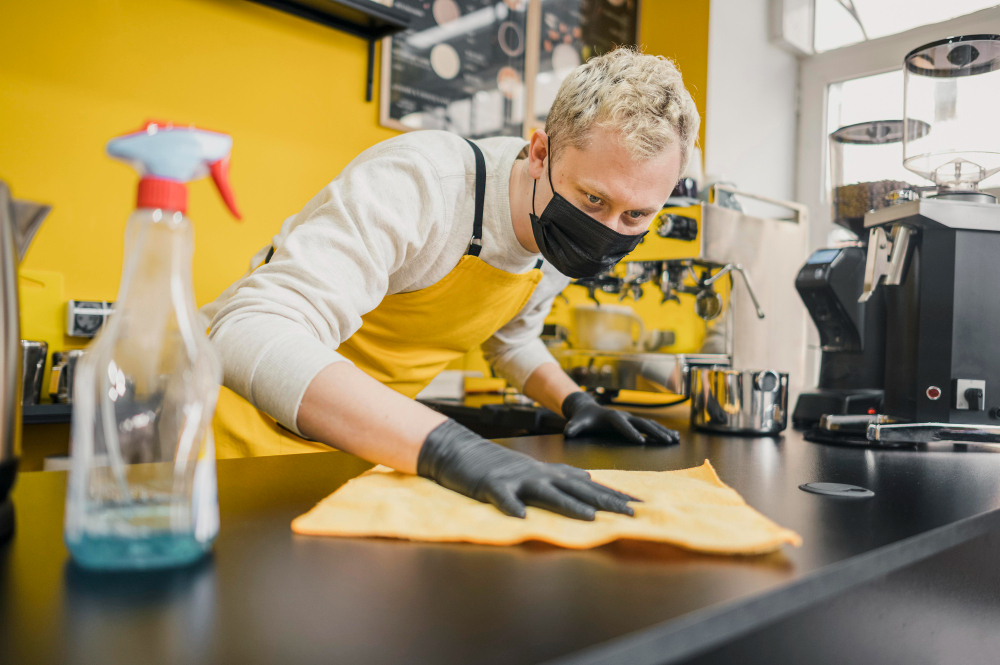
Most kitchens look clean at first glance. Counters wiped, floors mopped, bins cleared. But pull a fryer a few inches forward or peek behind a prep table, and it’s a different story. Grease tends to settle in the spots no one reaches during a regular shift.
That’s usually when the idea of calling a commercial kitchen cleaning company comes up. Not because the team isn’t doing their job, but because some areas are simply hard to deal with during daily operations.
Where Things Usually Go Wrong
It’s not always about skipping cleaning- it’s how it’s done. People try to make do with whatever tools are available, maybe use a stronger chemical than needed, or push equipment just a little too hard to reach behind it.
The problem is, kitchen equipment isn’t forgiving. A loose connection, a scratched surface, or moisture getting into the wrong place can lead to issues that don’t show up immediately. You notice them later, when something stops working the way it should.
Why Experience Changes the Outcome
A good commercial kitchen cleaning company doesn’t treat every surface the same. Stainless steel, rubber seals, wiring, vents- each needs a slightly different approach.
There’s also a sense of what not to touch. That matters just as much. Instead of forcing equipment to move, they work around it when needed or shift it carefully with the right support. It’s less about speed and more about not creating new problems while fixing old ones.
The Hidden Build-Up You Don’t See Daily
The most stubborn grime isn’t out in the open. It builds up slowly behind grills, under heavy counters, and inside ventilation paths. By the time it’s visible, it’s already been there a while.
This is where commercial grease trap cleaning becomes important. The process helps to remove accumulated materials which create drainage problems and produce bad odors when they remain untreated for extended periods.
The commercial vent cleaning process maintains proper airflow which prevents grease from building up in exhaust systems. Both areas are easy to ignore but hard to deal with later if neglected.
What a Careful Cleaning Process Looks Like
If you ever watch professionals handle this kind of job, it’s noticeably methodical. Nothing rushed, nothing forced.
- They don’t flood surfaces with water, especially near connections
- Softer tools are used instead of anything abrasive
- Equipment is moved only when there’s a clear, safe way to do it
- Cleaning products are chosen based on the material, not just how strong they are
- Sensitive sections are covered before any deep work begins
That kind of attention is usually what you get from a commercial kitchen cleaning company that’s done this many times before.
Why Kitchen Teams Don’t Always Handle It
It’s not really about skill- it’s about time and practicality. During service hours, the focus is on keeping things running. After hours, energy is limited and no one wants to start shifting heavy equipment around.
So those tight spaces get skipped. Not intentionally, just realistically. Over time, though, that buildup becomes harder to ignore.
Bringing in a commercial kitchen cleaning company once in a while helps reset everything without adding extra pressure on the staff.